
Protect High-Traffic Pavement From Accelerated Wear
Commercial Sealcoating in Springfield MA for parking lots, access roads, and loading areas showing oxidation, surface wear, or UV damage before structural failure occurs
State Line Paving offers commercial sealcoating services across Springfield MA, treating parking lots, access roads, and loading areas at offices, retail centers, and industrial sites that need protection from water, chemicals, and UV exposure. You call when the pavement fades to gray, when the surface roughens and loses its binder, or when you want to extend the service life of recently paved areas before costly repairs become necessary.
Sealcoating slows oxidation and shields asphalt from gasoline, oil, road salt, and the freeze-thaw cycles that dominate Springfield winters. High-traffic areas wear faster than residential driveways, and regular sealcoating reduces cracking, prevents water infiltration, and delays the need for resurfacing by maintaining the pavement's flexibility and binder content. Applying sealer every two to three years keeps the surface intact and reduces maintenance costs over the pavement's lifespan.
If your parking lot or loading area looks worn, shows minor cracking, or you want to protect a recent paving investment, reach out to State Line Paving to schedule sealcoating during the warm season.
The Commercial Sealcoating Process
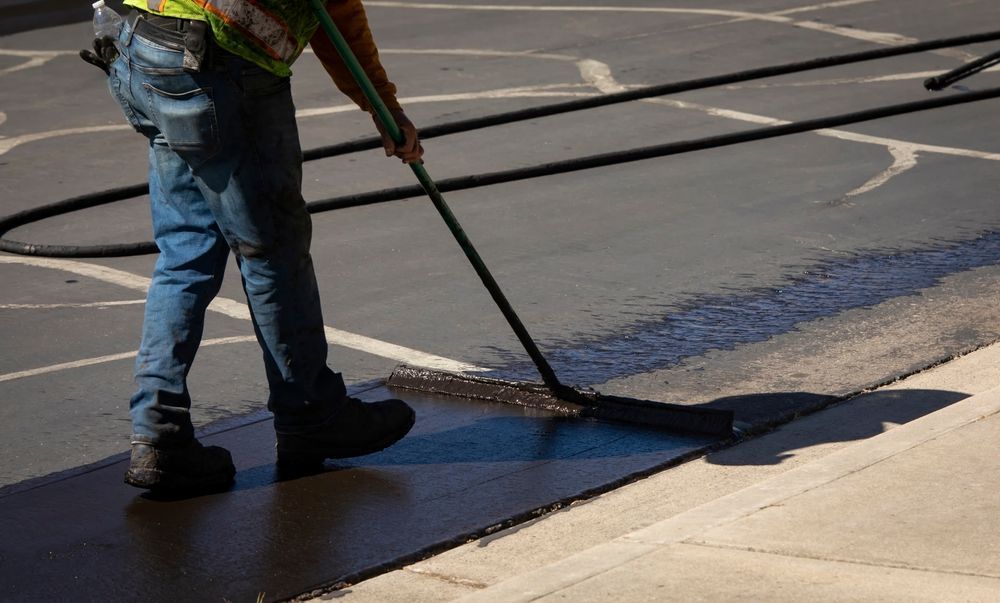
The crew begins by power-washing the pavement to remove dirt, oil stains, and loose debris, then repairs cracks with hot tar filler before applying sealer. State Line Paving uses spray equipment to apply two coats of commercial-grade asphalt emulsion, working in sections to maintain partial lot access if your business cannot close entirely. The first coat penetrates surface voids, and the second coat builds a uniform protective layer that cures into a dark, water-resistant finish.
After sealcoating, the parking lot or loading area shows a consistent black surface that looks newly paved, with restored color and a smooth texture. Water runs off instead of pooling or soaking into the pavement, and the surface resists staining from vehicle fluids. Line striping becomes more visible against the fresh background, and customers notice the improved appearance immediately.
Commercial sealcoating requires coordination with property managers to schedule work during off-hours or slower business periods, and the pavement must remain closed to traffic for 24 to 48 hours while the sealer cures. Weather must be dry with temperatures above fifty degrees, and rain within the curing window can damage the finish. Heavily deteriorated pavement, deep cracks, or base failures need repair before sealcoating, as the sealer does not restore structural integrity.
Common Questions About Commercial Pavement Sealing
Property managers and business owners often ask about scheduling, surface preparation, and how sealcoating fits into broader pavement maintenance plans, especially when balancing budgets and operational demands.
How do you sealcoat without closing the entire lot?
Crews work in phases, sealing one section at a time and barricading it while leaving other areas open for parking and access, then moving equipment and barriers once the sealed section cures enough for light traffic.
What preparation does the pavement need before sealcoating?
The surface must be clean, dry, and free of oil stains or loose material, and any cracks wider than a quarter inch should be filled with hot tar to prevent water infiltration that the sealer alone cannot stop.
How long does commercial sealcoat last?
Properly applied sealer typically lasts two to three years under normal traffic and weather conditions in Springfield MA, after which reapplication is recommended to maintain protection and appearance.
Why does the lot need to stay closed during curing?
Vehicles driving on uncured sealer can leave tire marks, scuff the surface, or track the material onto other areas, and the weight can prevent proper bonding and reduce the sealer's effectiveness.
When is the best time to sealcoat a commercial lot?
Schedule sealcoating in late spring through early fall when temperatures stay consistently warm and rain is less frequent, allowing the sealer to cure fully before cold weather or heavy precipitation returns to Springfield MA.
State Line Paving provides commercial sealcoating for offices, retail centers, and industrial properties throughout Springfield MA, coordinating with your schedule to minimize disruption. If you want to assess your pavement's condition and plan maintenance, contact the team to arrange a site visit and sealcoating proposal.